September 1, 2026
Caring for Gold and Stones You Wear Every Day
Warm water, unscented soap, a soft cloth — plus the things that quietly ruin a hand-polished finish, how hard each stone really is, and what the Lifetime Care Guarantee covers.
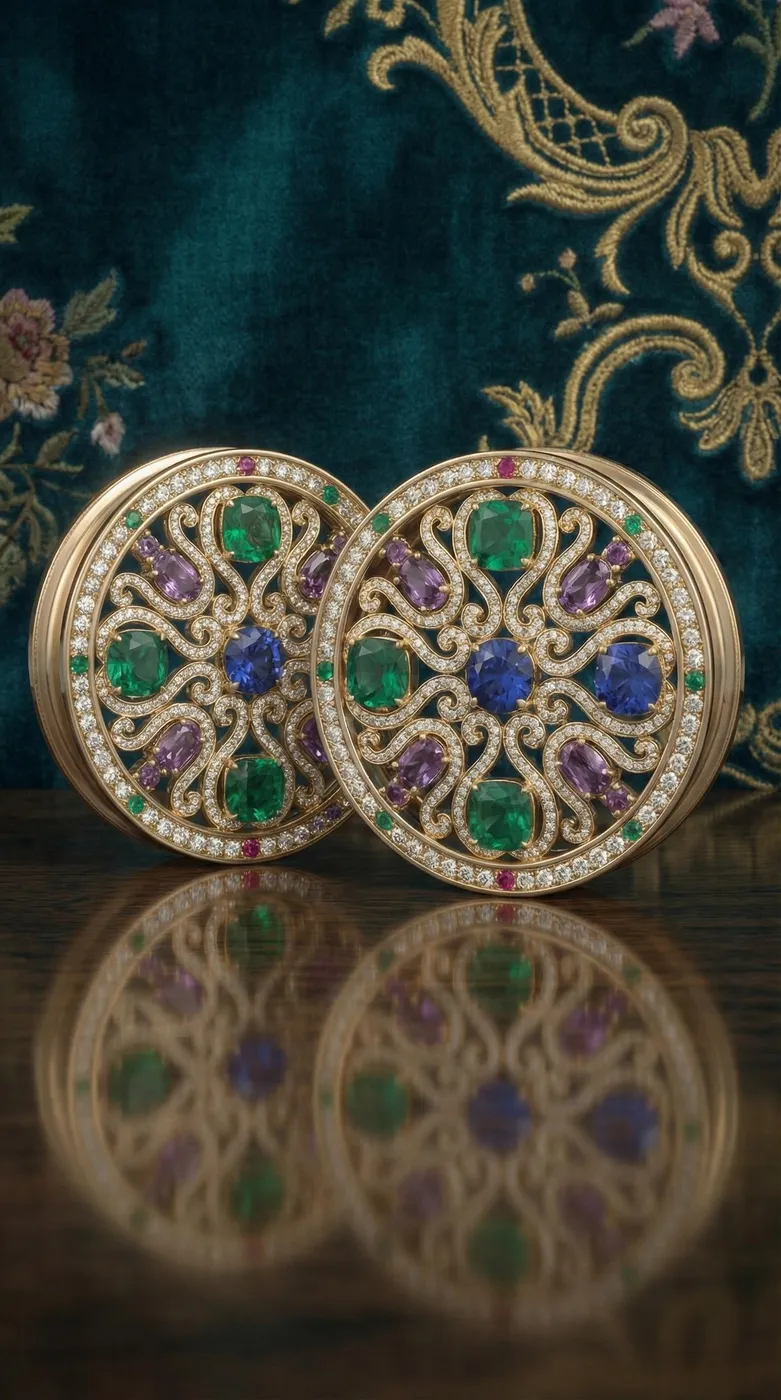
A pair worn every day lives in body oil, soap, steam and fabric. None of that is a problem — gold and moissanite are both far tougher than daily life. The damage we see on the bench almost never comes from wear. It comes from cleaning.
This is the routine we would give a friend, plus the short list of things that quietly ruin a hand-polished finish, plus exactly what the Lifetime Care Guarantee covers when something does go wrong.
The routine
It takes about two minutes a week, and roughly ten seconds a day.
Weekly clean. Warm water, one drop of unscented liquid soap, a soft cloth or a soft toothbrush for the areas behind stones. Work gently around the settings rather than scrubbing across them. Rinse thoroughly — soap residue left in a channel setting dulls the sparkle faster than dirt does. Pat dry with a lint-free cloth and let the pair dry fully before wearing.
Daily wipe. A microfibre cloth over the faces and barrel after wear. Body oils will tarnish any metal if they are left to sit, and this single habit does more for a piece than any product you can buy.
Storage. Keep pairs in the pouch they arrived in, apart from other metal. Cool, dry, out of direct sunlight. Metal against metal in a dish is how fine scratches appear on pieces that were never dropped.
What to avoid, and why
| Avoid | What it does |
|---|---|
| Ultrasonic cleaners | Vibration can loosen stones in prong and channel settings — the hardest damage to notice and the most expensive to fix |
| Chlorine (pools, hot tubs, bleach) | Attacks alloy metals in gold over repeated exposure and can leave permanent dullness |
| Abrasive polishes and polishing cloths with compound | Remove metal. They flatten a hand-polished finish into a hazy one |
| Toothpaste | An abrasive with good marketing. Same problem as above |
| Steam cleaners | Thermal shock is a risk with some stones, and steam drives moisture into settings |
| Perfume, hairspray, sunscreen | Film builds in the setting and behind stones; it is the usual cause of "my stones went dull" |
The pattern is simple: anything that cleans by force is a problem; anything that cleans by dissolving oil is fine. Warm water and mild soap dissolve oil. That is why they are the whole method.
The best sequencing habit is jewellery last, jewellery off first. Put the pair in after skincare, sunscreen, perfume and hair products; take it out before them next time.
Metal by metal
Solid gold (10k, 14k). Gold does not rust or tarnish in any meaningful way. What it does do is take fine surface scratches with wear, which over months read as a softening of the polish. That is normal and completely reversible — it is metal being re-polished, not lost. Higher-karat alloys are a touch softer and mark slightly more easily; lower-karat alloys are harder but contain more non-gold metal.
Sterling silver. Silver tarnishes. It is a reaction with sulphur compounds in air and on skin, not damage, and it varies enormously person to person — diet, humidity, medication and skin chemistry all change how fast it happens. A dry wipe after wear and storage in a closed pouch slow it down a lot. When tarnish does build, warm soapy water and a soft cloth handle a light film; anything heavier is a job for a re-polish rather than a supermarket dip, which strips more than the tarnish.
Stones, and how tough they actually are
Mineral hardness is measured on the Mohs scale, which describes resistance to scratching — not resistance to being knocked.
| Stone | Mohs hardness | In practice |
|---|---|---|
| Moissanite | ~9.25 | Exceptionally scratch-resistant; near the top of what is used in jewellery |
| Natural or lab diamond | 10 | The hardest; still chippable at an exposed edge |
| Sapphire and ruby (corundum) | 9 | Very hard, very durable in daily wear |
| Emerald (beryl) | 7.5–8 | Hard, but commonly included and therefore more brittle than the number suggests |
| Amethyst (quartz) | 7 | Fine for daily wear; will scratch against harder stones in storage |
Two things follow from that table. First, hardness is not toughness: a diamond is the hardest material on the list and can still chip if a girdle edge takes a sharp knock at the wrong angle. Second, the harder stones will scratch the softer ones, which is the real reason to store pairs separately rather than loose together.
Emeralds deserve a note of their own. Most emeralds on the market — including fine ones — are treated with oil or resin to improve the appearance of their natural inclusions. That treatment is normal and disclosed, but it is also why emerald pieces should never see an ultrasonic, a steam cleaner, or hot water: those can strip the treatment and change how the stone reads. Warm — not hot — water, mild soap, soft brush, dry cloth.
What "dull" usually means
When a pair stops sparkling, one of three things is true, and they have different fixes:
- Film on the stones. Sunscreen, lotion, hairspray, soap residue. A proper warm soapy clean with a soft brush behind the stones brings it straight back. This is the answer nine times out of ten.
- The metal has lost its polish. Fine wear scratches scattering light. Home polishing cloths make this worse because they are abrasive. This is a bench job.
- A stone has moved. If a stone catches the light differently than its neighbours, or you can feel any movement with a fingernail, stop wearing the pair and write to us. A loose stone that keeps being worn becomes a lost stone.
What the Lifetime Care Guarantee covers
Made-to-order pieces are final sale, because they are cut to a size only you ordered. That does not mean you are on your own afterwards. Every PLUGS+ piece carries the Lifetime Care Guarantee:
- Free polish and re-finish for life. Send your pair back whenever it dulls and it comes back looking like the day it left the bench — no charge, no limit on how often you use it.
- Repairs at cost. Bent post, lost stone, cracked flare: fixed for the price of materials and bench time, never marked up.
- How to start. Email orders@plugsplus.com with your order number and a photo, and we will send return instructions.
Shipping to us is on you; shipping back is on us. Loss, theft, and normal wear on plating are not covered — and since we do not plate anything, that last one is only relevant to pieces made elsewhere. The full terms live on the shipping and returns page.
This is also the practical argument for solid metal at large gauges: a re-finish is only possible when the surface and the substance are the same material. There is more on that in solid gold vs. plated.
A short note on fresh stretches
If you have moved up a size recently, treat the lobe and the jewellery as separate maintenance jobs. Keep the pair clean by the routine above, and give the lobe the six to eight weeks it needs before anything else changes. Heavy pairs and recent stretches are not a good combination — rotate to something lighter on long days. The full method is in how to stretch safely.
When you are ready for the next size, the catalogue runs 3mm to 25mm across the shop, and the true-size visualiser will show you the gauge at actual scale before you commit.
Made to order
Browse the sizes currently available for each piece, or request another measurement through Custom.
Shop the gauges